Loading...
Serving Orem, UT and surrounding areas. (385) 486-0154
Orem Masonry & Concrete serves Cedar Hills homeowners with fireplace installation, retaining walls, and brick work built to hold up through Utah Valley winters. We have served Utah County since 2019 and respond to every new inquiry within 1 business day.
Cedar Hills homes sit close to the Wasatch Mountains, deal with hard winters at nearly 4,900 feet, and are mostly 15 to 30 years old - an age range when masonry and concrete work comes due. These are the services Cedar Hills homeowners call us for.
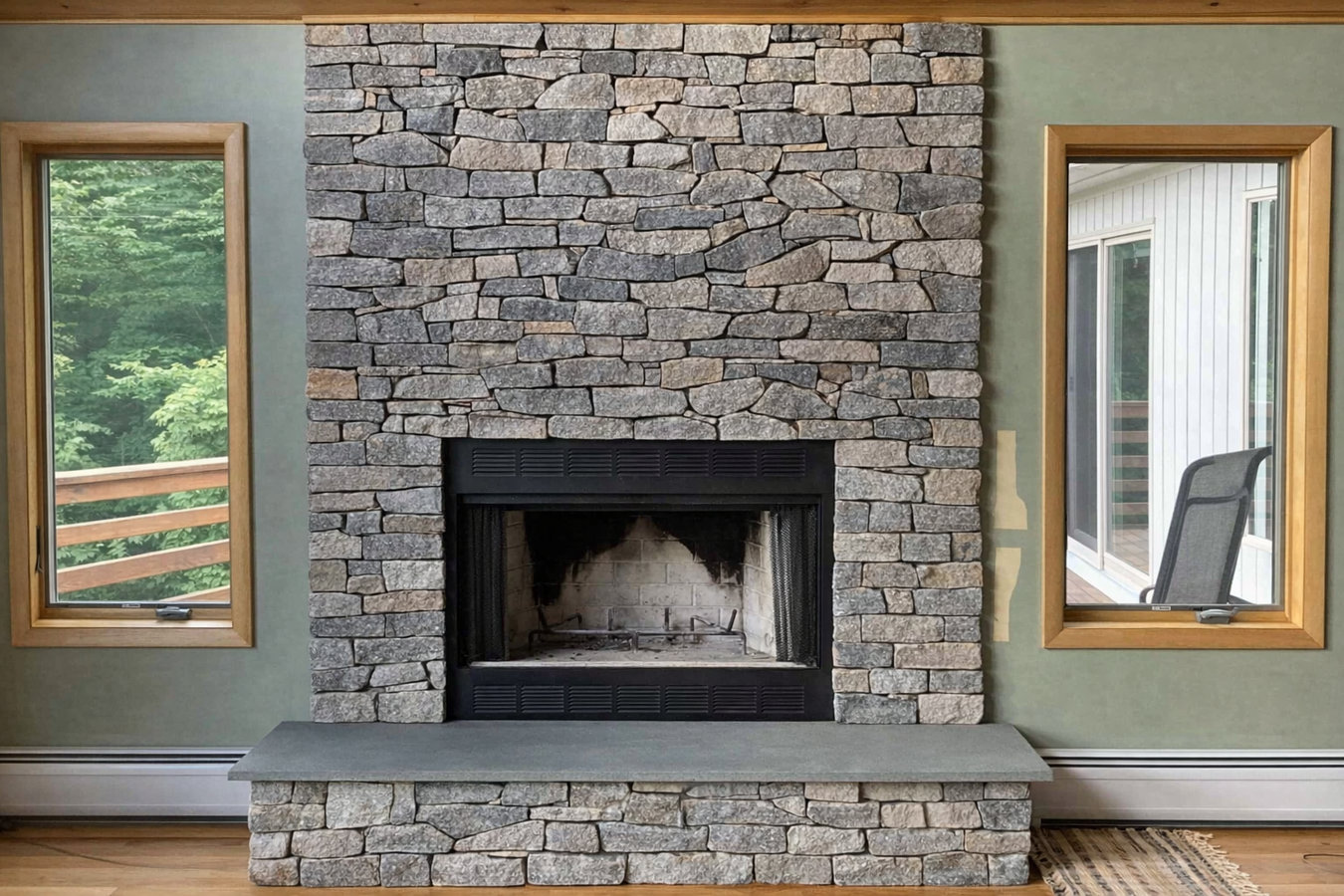
Cedar Hills winters are cold enough that a fireplace is a real comfort feature, not just a decorative one - and homeowners here typically invest in quality work that lasts. We build masonry fireplaces from the footing up and install gas inserts, and every fireplace installation is permitted through Cedar Hills City so it passes inspection and keeps your insurance valid.
Many Cedar Hills lots climb toward the Wasatch foothills on sloped or terraced terrain. Retaining walls on these properties face concentrated spring runoff from American Fork Canyon above - proper drainage design is not optional here, it is what keeps the wall from shifting within a few winters.
Cedar Hills homes often have large two- and three-car garage driveways that are now 15 to 30 years old. Freeze-thaw cycles at this elevation cause surface spalling and cracking that gets worse each winter without repair. We replace and repair driveways with proper base preparation so the same damage does not come back the following season.
Stucco-and-brick-accent exteriors are common in the 1990s and 2000s Cedar Hills housing stock. UV exposure at nearly 4,900 feet degrades mortar and surface coatings faster than at lower elevations, and north-facing brick is often first to show damage. We match existing brick to keep repairs from standing out.
Mortar joints on Cedar Hills homes that have been through 20 or more Utah winters often show softening, crumbling, or hairline gaps where water is already working in. Tuckpointing replaces deteriorated mortar before water reaches the brick course and creates a more expensive repair - or water intrusion behind the wall.
Cedar Hills homeowners investing in exterior upgrades increasingly choose stone veneer for entry columns, lower wall sections, and fireplace surrounds. It adds a high-end finish that fits the mountain-adjacent character of the city and holds up well in the dry, high-elevation climate here.
Cedar Hills sits at roughly 4,900 feet in elevation along the eastern edge of Utah Valley, right at the base of the Wasatch Mountains. That location means winters are colder and snowier than cities lower in the valley - the city typically sees 50 to 60 inches of snow per year and temperatures that regularly drop below 20 degrees Fahrenheit from November through March. Freeze-thaw cycles run for five months or more, and the clay-heavy soils throughout Utah Valley expand and contract with every wet season. That combination is hard on anything in or on the ground - foundations, retaining walls, concrete slabs, and paver driveways all take a hit every winter.
The housing stock adds another layer of specificity. Most Cedar Hills homes were built between the early 1990s and the mid-2010s, which means the bulk of driveways, exterior masonry, and concrete flatwork is now 15 to 30 years old. That is right at the age when original materials start to need real attention. Sloped lots on the east side of the city, near the Wasatch foothills, also face spring snowmelt runoff from American Fork Canyon - water that concentrates on hillside properties and creates drainage and erosion challenges that do not exist on flat valley lots. According to the Utah Geological Survey, frost heave from clay soils and seasonal freeze-thaw is a documented hazard throughout this elevation band in Utah Valley.
Our crew works throughout Cedar Hills regularly, and we understand the local conditions that affect masonry work here. Cedar Hills is a compact city of about 10,000 residents where nearly all homes are single-family, owner-occupied properties with private driveways, yards, and outdoor spaces. The homeowners here have invested significantly in their properties - median home values in Cedar Hills are consistently high for Utah County - and they expect work that reflects that investment.
The city shares a border with American Fork to the south and Pleasant Grove to the north, and those transitions are seamless at street level. The Cedar Hills Golf Club sits within city limits near the center of the community, and the neighborhoods fanning out toward the canyon to the east are among the most scenic in Utah Valley. Cedar Hills Boulevard is the main corridor through the city, and most of the residential streets branch east toward the mountain or west toward the valley floor. We pull permits through the Cedar Hills City building department for structural work in this municipality.
We also serve homeowners in neighboring Lindon, just to the north, and in Pleasant Grove, which borders Cedar Hills to the north. If you have family or neighbors in either city who need similar work, we can often schedule those jobs alongside yours to reduce travel costs.
Reach us by phone or through the contact form and describe what you are dealing with. We respond to every Cedar Hills inquiry within 1 business day and set up your site visit from there.
A crew member comes to your Cedar Hills property to assess the work in person. Sloped lots, drainage conditions, and soil type all affect scope here - these details cannot be evaluated from a photo. You receive a written estimate with no obligation before any decision is made.
For permitted work, we pull the required paperwork from Cedar Hills City and schedule inspections at each required stage. You do not need to be on-site during most of the work, though we ask that someone be reachable by phone in case questions come up.
When the job is done, we walk the property with you, review what was completed, and answer any maintenance questions. The site is cleaned up before we leave, and we are available if anything comes up after the job is closed out.
We serve all of Cedar Hills, UT and respond to every inquiry within 1 business day. No-pressure estimate, no commitment required.
(385) 486-0154Cedar Hills is a small city of roughly 10,000 residents in northern Utah County, incorporated in 1977 and developed primarily during the 1990s and 2000s. Nearly all housing here is single-family and owner-occupied - according to Census data for Cedar Hills, the city has one of the highest concentrations of families with children in Utah County. Most homes are larger than the county average - many exceed 2,500 square feet - and sit on their own lots with private driveways, yards, and outdoor spaces. The city borders American Fork to the south and Pleasant Grove to the north, and most residents use services and roads across all three cities without much distinction between them.
The defining geographic feature of Cedar Hills is its position at the base of the Wasatch Mountains, with American Fork Canyon directly accessible from the eastern edge of the city. That mountain setting is part of why people choose Cedar Hills - and it is also why properties here deal with elevation-specific conditions that affect masonry and concrete differently than homes lower in the valley. The Cedar Hills Recreation Center and city park serve as the community hub for families throughout the area. We work regularly throughout Cedar Hills and its neighboring cities, including American Fork, where housing ages and soil conditions are closely comparable.
Expert block wall foundations for new and existing structures.
Learn MoreCall or submit a request online. We cover all of Cedar Hills, UT and respond within 1 business day.