
Loading...
Serving Orem, UT and surrounding areas. (385) 486-0154
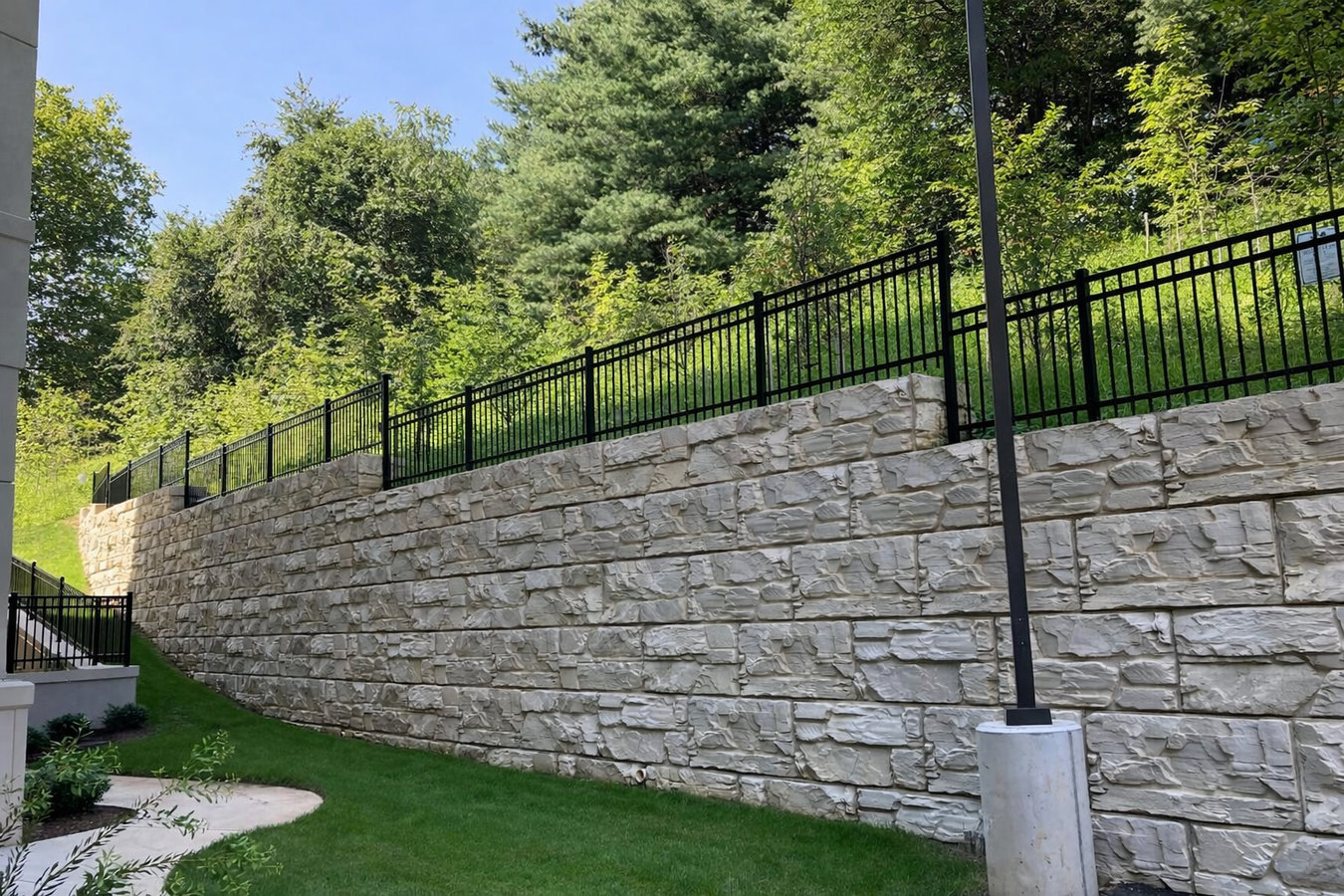
Slopes washing out every spring? We build retaining walls in Orem with the drainage and footing depth Utah clay soils and Wasatch winters demand.
Retaining wall construction in Orem means building a structure that holds back soil on a slope so it does not slide, erode, or wash into your yard, driveway, or home - most small to mid-sized residential walls are finished in two to four days. Without a wall, a hillside or raised planting bed can slowly creep downhill, especially after heavy rain or snowmelt. In Orem, where Wasatch snowpack melts quickly every spring, that erosion problem gets worse every year you wait.
The most common reason walls fail here is not the material - it is water. Orem sits on clay-heavy soil that swells when wet and puts enormous pressure on whatever is holding it back. When that pressure has nowhere to go, it pushes the wall forward. A properly built wall includes gravel backfill and drainage outlets behind the structure so water escapes harmlessly. If your property also needs the look of the wall to integrate with the rest of the masonry, masonry restoration services can help tie everything together once the structural work is complete.
If you notice bare patches of soil, small gullies, or a trail of dirt washing onto your driveway or sidewalk after rain or snowmelt, your slope is eroding. In Orem, this is especially common in spring when the Wasatch snowpack melts quickly and saturates the ground. A retaining wall stops that erosion by holding the soil in place.
A wall that tilts forward - even slightly - is under stress it was not designed to handle. In Orem's clay-heavy soils, water pressure building up behind the wall is often the cause. Do not wait for it to fall; a leaning wall can collapse suddenly, and rebuilding after a failure almost always costs more than repairing it early.
If part of your yard is too steep to mow, plant, or use, a retaining wall can turn that wasted slope into a flat, usable terrace. Many Orem homeowners on the east bench have significant grade changes that make their yards feel smaller than they are - a well-designed wall reclaims that space.
If water collects against your home's foundation during or after a storm, a slope nearby may be directing runoff toward the house. Over time, that moisture can damage your foundation and create problems inside your basement or crawl space. A retaining wall combined with proper grading redirects water away from your home.
We build retaining walls using concrete block, natural stone, and brick - each suited to different budgets, aesthetics, and structural requirements. Concrete block is our most requested material because it is durable, versatile, and holds up well to the lateral pressure that Orem's clay soils generate season after season. Natural stone walls cost more but age beautifully and can complement a home's exterior in a way that manufactured block cannot. Whatever material we use, every wall gets the same drainage treatment: compacted base course, gravel backfill, and an outlet that lets water escape behind the wall rather than building up.
Retaining wall projects often pair naturally with other work on the property. We frequently combine wall construction with masonry restoration when adjacent brick or stone surfaces need repair, or with concrete block walls for property boundary or structural applications. Combining projects in a single mobilization saves time and keeps the finished look consistent across your property.
Best for homeowners who need a durable, cost-effective solution that handles heavy soil pressure and freeze-thaw cycles without maintenance.
A good fit for homeowners who want a premium look that integrates with existing stone or masonry features and ages gracefully over decades.
Suits homes where existing brick on the house or other structures makes a matching wall the most visually cohesive choice.
Orem sits at roughly 4,700 feet elevation along the Wasatch Front, and the ground freezes and thaws repeatedly from November through March. Every time the soil freezes, it expands; when it thaws, it contracts. Over several winters, this movement can push a poorly built wall out of alignment or crack its base. The other major factor is the clay-heavy soil that covers much of the valley floor - a legacy of ancient Lake Bonneville. Clay holds water and swells when wet, which means drainage behind the wall is not optional here; it is the single most important factor in how long your wall lasts. Homeowners near American Fork and Mapleton face the same soil and frost conditions, and we bring that same local knowledge to every project we take on in those communities.
Orem's building department requires a permit for walls taller than 4 feet, and the spring snowmelt window creates a surge in demand for masonry contractors right at the start of the outdoor building season. If you think you need a retaining wall, reaching out before March gives you more scheduling options and a better chance at a May start date. Waiting until the erosion damage is already visible means competing with every other Orem homeowner who discovered the same problem at the same time.
We reply within one business day. Tell us roughly how long and tall you think the wall needs to be, and whether there is an existing wall to remove. We will schedule a free on-site visit - accurate pricing requires seeing the slope and soil in person.
We walk your property, measure the slope, and assess the soil and drainage conditions. You leave the visit with a written estimate that separates materials, labor, drainage work, and permit fees - so you know exactly what you are paying for.
If your wall will be taller than 4 feet, we apply for the City of Orem building permit before work begins. If you are in an HOA, we advise submitting your approval request at the same time so both processes run in parallel and do not delay your start date.
The crew excavates, sets the base, builds the wall course by course, and installs drainage as they go. A 30-foot wall typically takes two to four days on site. When complete, we do a final walkthrough with you and coordinate any required city inspection - you do not need to be home for it.
Free on-site estimate, no obligation. We reply within one business day.
(385) 486-0154Every wall we build includes gravel backfill and a drainage outlet - not as an upgrade, but as standard. In Orem's clay-heavy soils, skipping drainage is the single most common reason walls fail within a few years. We do not skip it, and we explain exactly where and how water will exit the wall before we break ground.
Orem's freeze-thaw cycle demands deeper footings than a warmer-climate spec would call for. We set footings to the depth this area's frost conditions require, so the base of your wall does not shift when the ground freezes and thaws every winter. That foundation depth is what separates a wall that lasts 40 years from one that starts leaning after five.
Orem's building department requires permits for walls taller than 4 feet, and we handle that application from start to finish. A permitted wall is inspected by the city and goes on record - which protects you when you sell and gives you documentation that the work was done to code. The City of Orem Building Department site has current permit fee schedules if you want to review them before we talk.
We call 811 to have underground utilities marked before any excavation starts. Hitting an irrigation line or a buried cable during wall construction is a costly mistake - and an entirely preventable one. We confirm utility marking is complete before the first shovel goes in.
We have built retaining walls across Orem and Utah Valley, and every project gets the same drainage-first, footing-depth approach regardless of wall size. When we do the walkthrough at the end, you should be able to see a level, tight wall with visible drainage at the base - those are the signs of a wall that will still be standing in 30 years.
Repair and restore existing brick, stone, or block surfaces alongside or connected to your new retaining wall.
Learn MoreBuild freestanding concrete block walls for property boundaries, privacy screens, or structural applications.
Learn MoreSpring slots fill fast - reach out before the snowmelt rush and lock in your build date.